
Canada has long been one of the most popular study destinations for Indian students. However, in recent years, a growing number of students have started learning French before beginning their Canadian journey.
This trend is no longer limited to students planning to study in Quebec. Across Canada, French language skills are becoming a valuable asset for education, employment, immigration, and long-term settlement.
If you are wondering Why Indian Students Are Learning French Before Moving to Canada, the answer lies in the significant advantages French proficiency can offer.
From boosting immigration scores to increasing job opportunities, learning French has become a strategic investment for students aiming to build a successful future in Canada.
Continue reading this informative guide by LinguoPrep.
Key Insight: French can support Indian students with immigration opportunities, CRS improvement, bilingual employment, cultural integration, and long-term career growth in Canada.
Quick Answer: Why Are Indian Students Learning French Before Moving to Canada?
Indian students are learning French before moving to Canada because French proficiency can improve immigration opportunities, increase CRS scores, expand job prospects, provide access to French-speaking communities, and support eligibility for immigration pathways designed for Francophone and bilingual candidates.
The Growing Importance of French in Canada
Canada is officially bilingual, recognising both English and French as official languages.
While English dominates in many provinces, French remains widely spoken, particularly in Quebec and several communities across Ontario, New Brunswick, Manitoba, and other regions.
The Canadian government continues to encourage French-speaking immigration outside Quebec through targeted initiatives and immigration programs.
As a result, students who choose to learn French for Canada may gain advantages that monolingual applicants do not have.
ALSO READ:Why French Is Becoming the Smartest Language to Learn for Canada PR in 2026
French Can Increase Your CRS Score
One of the biggest reasons Indian students are learning French before moving to Canada is the potential impact French can have on Express Entry profiles.
Under Canada’s immigration system, eligible candidates may receive additional Comprehensive Ranking System points for strong French-language proficiency.
How French Helps
Students who demonstrate strong French skills through approved tests such as TEF Canada or TCF Canada may receive:
- Additional CRS points
- A better ranking in the Express Entry pool
- Improved chances of receiving an Invitation to Apply
- Access to French-language category-based draws
- A stronger bilingual immigration profile
For some applicants, French can make the difference between receiving an invitation and remaining in the Express Entry pool.
Immigration Insight: French does not replace English, but it can complement a strong English score and improve the competitiveness of an eligible Express Entry profile.
Access to French-Specific Immigration Pathways
The Canadian government has introduced initiatives aimed at increasing Francophone immigration outside Quebec.
These programs can create additional opportunities for bilingual candidates, French-speaking workers, and international graduates.
Potential Advantages Include:
- French-language category-based Express Entry draws
- Provincial Nominee Programs targeting French speakers
- Francophone immigration streams
- Greater selection opportunities in specific provinces
- Employment opportunities in bilingual communities
This is one of the key reasons why French language for Canada immigration has become increasingly important.
ALSO READ:Ontario French-Speaking Skilled Worker Stream
Better Job Opportunities After Graduation
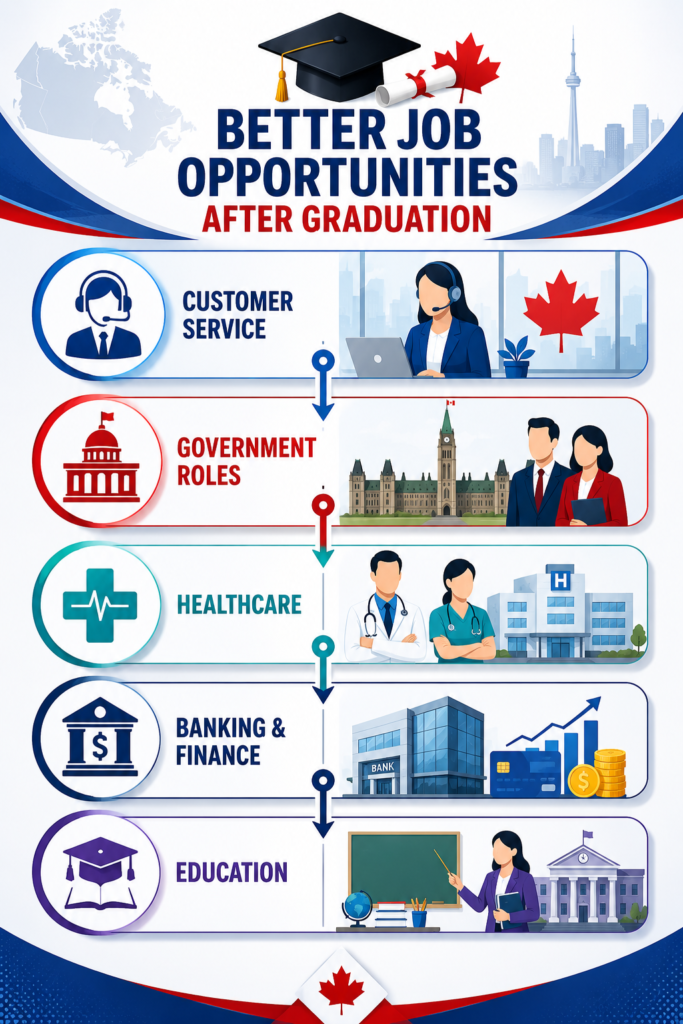
Learning French can significantly enhance employment prospects after graduation.
Many employers actively seek bilingual professionals who can communicate in both English and French.
Customer Service
Organisations serving clients across Canada often prefer employees who can communicate with both English-speaking and French-speaking customers.
Government Roles
French proficiency can be valuable for federal, provincial, and public-service positions that involve bilingual communication.
Healthcare
Hospitals, clinics, and healthcare providers may seek bilingual professionals who can communicate effectively with French-speaking patients.
Banking and Finance
Major financial institutions often value bilingual customer-facing employees.
Education
French-speaking educators, teaching assistants, and support professionals may find opportunities across several provinces.
Students who learn French for Canada may be able to compete for a broader range of employment opportunities.
Career Insight: When two candidates have similar education and experience, French proficiency can help the bilingual applicant stand out.
Greater Opportunities in Quebec
Quebec remains one of Canada’s major destinations for international students.
French proficiency can provide benefits such as:
- Easier integration into local communities
- Improved employment opportunities
- Access to French-language academic programs
- Enhanced networking opportunities
- Better communication in daily life
Even students who initially plan to study elsewhere may later discover educational or professional opportunities in Quebec where French skills become extremely valuable.
Easier Integration Into Canadian Society
Language plays an important role in adapting to life abroad.
Students who understand French can communicate more effectively in bilingual regions and engage with a wider range of Canadian communities.
Potential benefits include:
- Stronger social connections
- Better cultural understanding
- Improved confidence
- Greater participation in community activities
- More effective communication in bilingual areas
This broader integration experience is another reason why Indian students are learning French before moving to Canada.
French Can Future-Proof Your Career
The global demand for bilingual professionals continues to grow.
French is spoken by millions of people worldwide and is used in international business, diplomacy, education, tourism, government, and global organisations.
Learning French can benefit students beyond Canada by opening doors to:
- International careers
- Global business opportunities
- Diplomatic roles
- International education pathways
- Multilingual customer-service positions
- Employment in international organisations
Students increasingly view French as a long-term career investment rather than simply an immigration tool.
ALSO READ:Can French Help in Getting Canadian Citizenship?
Scholarships and Academic Advantages
Some Canadian institutions may offer scholarships, academic programs, and support opportunities connected to French-language or bilingual education.
Potential benefits may include:
- Francophone scholarships
- French-language academic programs
- Bilingual learning opportunities
- Enhanced exchange-program eligibility
- Access to French-speaking academic networks
Students who enrol in French courses for students before arriving in Canada may be better prepared to explore these educational opportunities.
Why Students Are Starting French Preparation Early
Many students understand that meaningful language improvement takes time.
Starting French studies before moving to Canada allows students to:
- Build confidence gradually
- Develop a strong vocabulary foundation
- Improve pronunciation and fluency
- Prepare for TEF Canada or TCF Canada
- Achieve higher proficiency before immigration applications
- Reduce study pressure after arriving in Canada
Starting early also allows students to balance French learning with their study-abroad preparation.
Preparation Tip: Treat French as a long-term skill rather than a last-minute immigration requirement. Starting early gives you more time to improve all four language abilities.
Common Myths About Learning French for Canada
Myth 1: French Is Only Useful in Quebec
Reality: French-speaking communities exist across Canada, and federal immigration initiatives support Francophone newcomers outside Quebec.
Myth 2: You Must Be Completely Fluent
Reality: Different goals require different proficiency levels. Even developing practical French skills can support communication, employment, and future preparation.
Myth 3: French Is Too Difficult to Learn
Reality: French requires consistency, but structured training and regular practice can make the learning process manageable.
Myth 4: English Is Enough
Reality: English remains important, but bilingual candidates may have additional career, immigration, and networking advantages.
How to Start Learning French Before Moving to Canada
Students considering French should begin with a structured learning plan.
Beginner-Level Classes
Start with basic vocabulary, pronunciation, common expressions, and essential grammar.
Online Learning Platforms
Use structured online programs to strengthen foundational listening, reading, writing, and speaking skills.
French Practice Groups
Regular speaking practice with classmates, instructors, or language partners can improve fluency and confidence.
TEF Canada or TCF Canada Preparation
Students planning to use French for immigration should prepare specifically for an approved language test.
Professional Coaching
Many students enrol in specialised French courses for students to receive structured guidance, regular feedback, and goal-focused preparation.
Is Learning French Worth It for Indian Students?
For many students, learning French can be a valuable long-term investment.
French can support opportunities in:
- Immigration
- Employment
- Education
- Community integration
- Long-term career growth
- International networking
As competition for Canadian immigration and employment opportunities increases, bilingual candidates may stand out from applicants with similar qualifications.
How LinguoPrep Helps Students Learn French
At LinguoPrep, we help students build practical French language skills that support study-abroad goals, immigration preparation, and long-term career development.
Our French preparation support includes:
- Beginner-to-advanced French training
- Speaking and pronunciation practice
- Listening and reading development
- Grammar and writing support
- TEF Canada and TCF Canada preparation
- Structured learning plans
- Regular performance feedback
With structured guidance and consistent practice, students can develop French proficiency more confidently and efficiently.
Related Articles
- CELPIP to CLB Conversion Explained for Express Entry
- Ontario French-Speaking Skilled Worker Stream
- Can French Help in Getting Canadian Citizenship?
- Is TEF Easier Than IELTS?
- Why French Is Becoming the Smartest Language to Learn for Canada PR in 2026
Final Thoughts
The answer to Why Indian Students Are Learning French Before Moving to Canada is clear. French is no longer viewed as only a second language—it has become a strategic advantage.
From increasing CRS scores and improving immigration prospects to unlocking better employment and academic opportunities, French proficiency can strengthen a student’s future in Canada.
As Canada continues to support Francophone immigration and bilingual talent, students who invest in French today may benefit from greater opportunities in the future.
At LinguoPrep, we help students develop practical French skills that support education, immigration, community integration, and long-term career success.
Final Insight: Learning French before moving to Canada can help Indian students arrive better prepared for immigration, education, employment, and bilingual life in Canada.
Frequently Asked Questions
1. Why are Indian students learning French before moving to Canada?
Indian students are learning French because it can improve immigration opportunities, increase CRS scores, enhance job prospects, and provide access to French-speaking communities across Canada.
2. Does French help with Canadian PR?
Yes. Eligible candidates with strong French proficiency may receive additional CRS points and qualify for French-language immigration opportunities.
3. Is French mandatory for studying in Canada?
No. French is not mandatory for most Canadian study programs, but it can provide educational, professional, and immigration advantages.
4. Which French test is accepted for Canadian immigration?
TEF Canada and TCF Canada are approved French-language tests commonly used for Canadian immigration purposes.
5. Can French improve my Express Entry score?
Yes. Eligible French-language results may provide additional CRS points and improve Express Entry competitiveness.
6. Is French useful outside Quebec?
Yes. French-speaking communities, federal services, and bilingual employment opportunities exist throughout Canada.
7. How long does it take to learn French for Canada?
The timeline depends on your starting level, study routine, target proficiency, and consistency. Many learners require several months or longer to build useful proficiency.
8. Are there jobs in Canada that require French?
Yes. Government, healthcare, education, customer service, banking, and finance employers may seek bilingual candidates.
9. Should I learn French before applying for a study permit?
French is not required for most study permit applications, but learning it early can support future immigration, employment, and settlement opportunities.
10. What are the benefits of learning French before studying in Canada?
The benefits include stronger immigration potential, additional job opportunities, improved cultural integration, broader academic options, and greater long-term career flexibility.
