

Canada is known for its multicultural society, strong economy, and excellent career opportunities. While English is widely used across the country, French remains one of Canada’s two official languages and continues to play a significant role in education, employment, business, and immigration.
For international students and professionals, learning French is no longer just an additional skill — it is becoming a strategic advantage. Understanding How French Improves Career Growth in Canada can open doors to better employment opportunities, higher earning potential, stronger professional networks, and enhanced immigration prospects.
At LinguoPrep, we help students and professionals develop French language skills that support both academic and career success in Canada.
Key Insight: French is more than a language skill in Canada. It can help students and professionals access bilingual careers, government roles, better networking opportunities, and stronger immigration pathways.
Why French Matters in Canada
Canada recognizes both English and French as official languages. Language proficiency is a critical part of Canadian society, public services, education, and the workforce.
French is especially important in:
- Quebec
- New Brunswick
- Ontario
- Federal government departments
- Healthcare
- Customer service
- Education
- Tourism
- Finance
- Technology
As Canada continues expanding Francophone immigration and bilingual services, demand for French-speaking talent is steadily increasing.
ALSO READ:Why French Is Becoming the Smartest Language to Learn for Canada PR in 2026
The Growing Demand for French Speakers
One of the biggest reasons How French Improves Career Growth in Canada has become such an important topic is the growing demand for bilingual professionals.
Many employers in Canada value candidates who can communicate in both English and French. This is especially true in provinces and cities where bilingual services are required or where companies serve both English-speaking and French-speaking clients.
Where Bilingual Talent Is in Demand
- Quebec-based companies
- New Brunswick businesses
- Ottawa and federal departments
- Customer service centres
- Healthcare institutions
- National-level companies
- Education and public administration sectors
These trends clearly demonstrate the increasing value of French language jobs in Canada.
More Job Opportunities Across Multiple Industries
One of the key Benefits of learning French in Canada is access to a wider range of employment opportunities. Many employers actively seek candidates who can communicate in both English and French.
Industries Hiring French Speakers
| Industry | Career Opportunities |
|---|---|
| Government and Public Service | Many federal government positions are designated as bilingual. |
| Healthcare | Hospitals and healthcare organizations serving French-speaking communities often require bilingual staff. |
| Customer Service | Companies prefer bilingual employees who can support customers in both official languages. |
| Education | Schools, colleges, and universities often seek French-speaking educators and administrators. |
| Tourism and Hospitality | Hotels, airlines, travel companies, and tourism organizations value French-speaking employees. |
These sectors provide excellent career opportunities for French speakers in Canada.
Competitive Advantage in the Job Market
The Canadian job market has become increasingly competitive. When employers compare candidates with similar education and experience, language skills often become a deciding factor.
Being bilingual allows candidates to:
- Apply for more positions
- Stand out from competitors
- Access leadership opportunities
- Expand professional networks
- Increase employability
This is one of the strongest examples of how learning French can improve your career in Canada.
Career Tip: If two candidates have the same education and work experience, French language skills can become a strong deciding factor for employers in Canada.
Higher Earning Potential
Language skills often contribute to better compensation. Many Canadian employers recognize the additional value bilingual employees bring through stronger communication, wider client reach, and better customer satisfaction.
Employers value bilingual professionals because they can support:
- Wider client communication
- Better customer support
- Improved service delivery
- Enhanced business operations
- Stronger workplace collaboration
This is one of the most practical benefits of being bilingual in English and French in Canada.
ALSO READ:Can French Help in Getting Canadian Citizenship?
French Improves Career Opportunities for International Students
International students often face challenges when entering the Canadian workforce. One effective way to strengthen employability is through French language proficiency.
Understanding how French helps international students find jobs in Canada can make a significant difference after graduation.
French-Speaking Graduates May Access
- More internship opportunities
- Additional co-op placements
- Bilingual graduate programs
- Government employment opportunities
- Expanded professional networks
For students seeking long-term success, French can provide a valuable competitive edge.
French Supports Career Growth in Government Jobs
The federal government remains one of Canada’s largest employers. Many government positions require bilingual proficiency because Canadians have the right to receive services in both official languages.
For professionals interested in the following fields, French proficiency can significantly increase career options:
- Public administration
- Policy development
- Immigration services
- Revenue services
- Healthcare administration
- Public service management
These roles often create strong pathways for bilingual careers in Canada.
French Creates Opportunities Beyond Quebec
Many people assume French is only useful in Quebec. The reality is very different. Demand for bilingual professionals exists across Canada, especially in regions where public services, customer support, and national business operations require both languages.
Growing Demand Exists In
- Ottawa
- Toronto
- New Brunswick
- Halifax
- Winnipeg
- Federal agencies nationwide
This expansion continues to create new French language jobs in Canada.
French Strengthens Immigration Opportunities
Another important reason How French Improves Career Growth in Canada matters is immigration. Canada actively encourages Francophone immigration and continues to increase its focus on French-speaking talent.
Canada’s immigration planning shows a clear commitment to attracting French-speaking applicants. As a result, French for Canada immigration has become one of the most valuable language investments for students and professionals.
French Can Support Immigration Goals By Helping With
- Francophone immigration pathways
- Additional language-based opportunities
- Stronger Express Entry profiles in some cases
- Better employability after arrival
- Long-term settlement success
Immigration Insight: French proficiency can strengthen both career and immigration planning because Canada continues to support Francophone communities outside Quebec.
Better Networking and Professional Relationships
Language is more than communication. It helps build trust and professional relationships. French proficiency enables professionals to connect with more people, communities, employers, and institutions.
French proficiency enables professionals to:
- Connect with more colleagues
- Participate in Francophone business communities
- Attend bilingual conferences
- Build stronger client relationships
- Access additional mentorship opportunities
Networking often plays a major role in career advancement, making this another important benefit of learning French in Canada.
French Opens Doors to Leadership Roles
Employers increasingly seek leaders who can communicate across diverse teams and markets. Bilingual professionals often qualify for roles where communication, client management, and team coordination are essential.
Bilingual Professionals May Qualify For
- Management positions
- Team leadership roles
- Regional management opportunities
- National-level positions
- Client relationship roles
Organizations serving both English and French-speaking clients benefit from leaders who can communicate effectively in both languages. This directly contributes to stronger bilingual careers in Canada.
Canada’s Commitment to Bilingualism
Canada continues investing in bilingualism and official languages education. Demand for French-language education and immersion programs continues to grow, which indicates that bilingualism will remain an important workforce skill for years to come.
These trends show that French language ability is not just useful today — it can remain valuable for long-term professional growth in Canada.
Industries Where French Skills Are Most Valuable
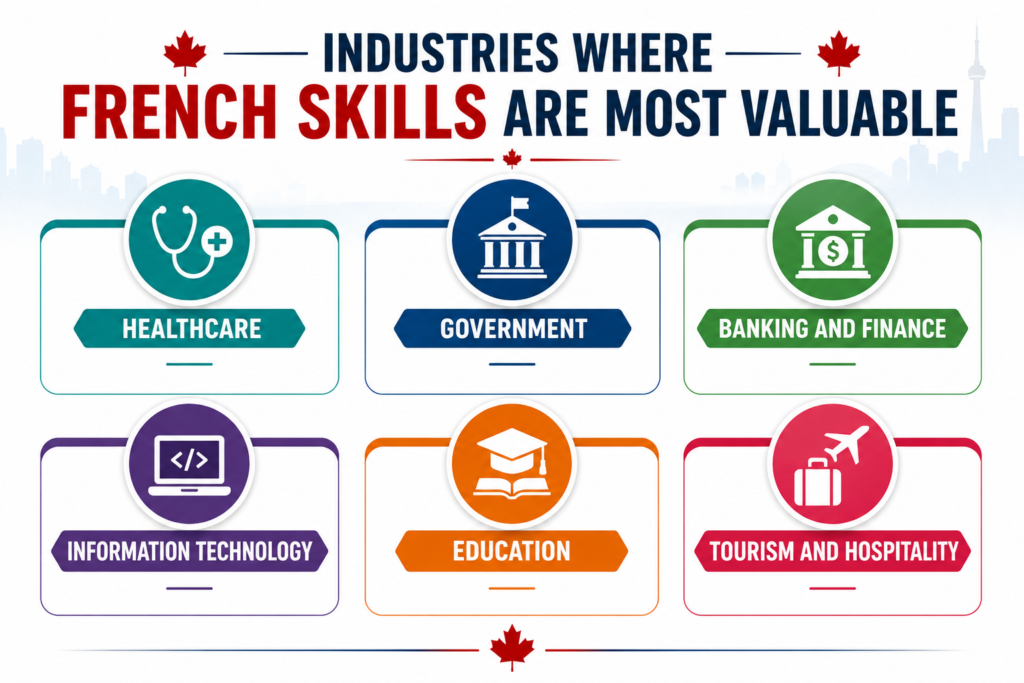
| Industry | Why French Helps |
|---|---|
| Healthcare | Supports patient communication and community services. |
| Government | Helps candidates qualify for federal and provincial bilingual positions. |
| Banking and Finance | Useful for customer-facing and advisory roles. |
| Information Technology | Supports national companies serving bilingual markets. |
| Education | Creates teaching and administration opportunities. |
| Tourism and Hospitality | Helps support domestic and international visitors. |
These sectors continue expanding career opportunities for French speakers in Canada.
ALSO READ:Ontario French-Speaking Skilled Worker Stream
How to Start Learning French
Achieving professional French proficiency does not happen overnight. Students and professionals should follow a structured learning approach that builds grammar, vocabulary, speaking confidence, and real-world communication skills.
Structured Learning
Enroll in professional French language programs to build a strong foundation.
Daily Practice
Consistent exposure through listening, reading, speaking, and writing improves fluency.
Speaking Confidence
Regular conversation practice is essential for workplace communication.
Industry-Specific Vocabulary
Learn terminology relevant to your career field, such as healthcare, business, education, or technology.
Professional Coaching
Guidance from experienced instructors can accelerate progress and help students avoid common mistakes.
At LinguoPrep, students receive personalized support designed to help them succeed academically, professionally, and linguistically.
How LinguoPrep Helps Students Build Career-Focused French Skills
LinguoPrep focuses on practical French language development that aligns with Canadian education and employment goals.
Students Benefit From
- Expert French instructors
- Career-focused learning
- Speaking practice sessions
- Interview preparation
- Immigration-oriented language guidance
- Flexible learning options
Whether your goal is education, employment, or immigration, LinguoPrep helps build the language skills needed to achieve success.
Final Insight: French can strengthen your career growth in Canada by improving employability, expanding job options, supporting immigration goals, and preparing you for bilingual professional opportunities.
Final Thoughts
Understanding How French Improves Career Growth in Canada is essential for students, professionals, and immigrants planning their future in Canada.
The demand for bilingual talent continues to grow across industries. From government positions and healthcare roles to technology, finance, education, and customer service, French proficiency creates opportunities that may not be available to unilingual candidates.
The growing number of French language jobs in Canada, expanding bilingual careers in Canada, and increasing emphasis on French for Canada immigration demonstrate that French is far more than a language skill — it is a career asset.
For those wondering how French helps international students find jobs in Canada or exploring how learning French can improve your career in Canada, the answer is clear: French opens doors, strengthens employability, enhances immigration prospects, and supports long-term professional success.
Contact LinguoPrep for personalized French learning plans and career-focused language training.
Frequently Asked Questions
1. How does French improve career growth in Canada?
French improves career growth by giving professionals access to more job opportunities, higher-paying bilingual positions, stronger networking opportunities, and greater eligibility for government and public service roles.
2. Is French necessary to get a job in Canada?
No, French is not mandatory for most jobs in Canada. However, being bilingual in English and French can significantly increase your employability and help you stand out in a competitive job market.
3. What are the benefits of learning French in Canada?
Some key benefits include access to more job opportunities, better career advancement, improved communication skills, expanded professional networks, and stronger immigration prospects.
4. Which industries have the highest demand for French speakers in Canada?
French-speaking professionals are highly sought after in government, healthcare, customer service, education, banking, finance, tourism, hospitality, and public administration sectors.
5. How does French help international students find jobs in Canada?
French language skills can help international students qualify for bilingual positions, internships, co-op placements, and graduate programs while increasing their competitiveness in the Canadian job market.
6. Can speaking French increase my salary in Canada?
Yes. Many employers value bilingual employees and may offer higher compensation, bilingual bonuses, or additional career advancement opportunities for candidates fluent in both English and French.
7. Is French useful outside Quebec?
Absolutely. French-speaking professionals are in demand across Canada, particularly in Ontario, New Brunswick, Ottawa, and federal government organizations that provide services in both official languages.
8. How does French support Canada immigration goals?
French proficiency can provide additional advantages under certain immigration pathways and supports Canada’s growing focus on Francophone immigration outside Quebec.
9. What level of French is required for career opportunities in Canada?
The required level varies by occupation and employer. Generally, intermediate to advanced French proficiency can open more employment opportunities and strengthen career prospects.
10. Why should I learn French with LinguoPrep?
LinguoPrep offers structured French language training, expert guidance, speaking practice, and career-focused learning designed to help students and professionals achieve their education, employment, and immigration goals in Canada.
Related Blogs
- CELPIP to CLB Conversion Explained for Express Entry
- CELPIP Test Day Guide 2026: Computer Test, Timing, Unscored Questions, Results and Common Mistakes
- Ontario French-Speaking Skilled Worker Stream
- Can French Help in Getting Canadian Citizenship?
- Is TEF Easier Than IELTS?
- Why French Is Becoming the Smartest Language to Learn for Canada PR in 2026
