
Learning French can be a valuable part of your Canadian permanent residence (PR) preparation. For eligible Express Entry candidates, French-language proficiency can provide additional Comprehensive Ranking System (CRS) points and may also help them qualify for French-language category-based selection.
However, choosing the right French course is important. A general French course can help you build vocabulary, grammar, and communication skills, while a TEF Canada or TCF Canada preparation course focuses on the specific tests used to demonstrate French proficiency for Canadian immigration.
In this guide, we explore online French learning options, including Coursera, structured French classes, exam preparation courses, and free resources. We also explain what to look for when choosing a course and how to plan your French learning journey for Canada PR in 2026.
Why Learn French for Canada PR in 2026?
French is one of Canada’s official languages, and French proficiency can be relevant to certain Canadian immigration pathways.
For Express Entry candidates, strong French results may provide additional CRS points. According to Immigration, Refugees and Citizenship Canada (IRCC), candidates who achieve NCLC 7 or higher in all four French abilities may qualify for:
- 25 additional CRS points if they have CLB 4 or lower in English or have not taken an English test.
- 50 additional CRS points if they also achieve CLB 5 or higher in all four English abilities.
French proficiency may also help candidates qualify for French-language category-based selection, provided they meet the applicable requirements.
However, learning French does not guarantee an Invitation to Apply (ITA) or permanent residence. Your eligibility and selection depend on your complete profile and the immigration rules in effect.
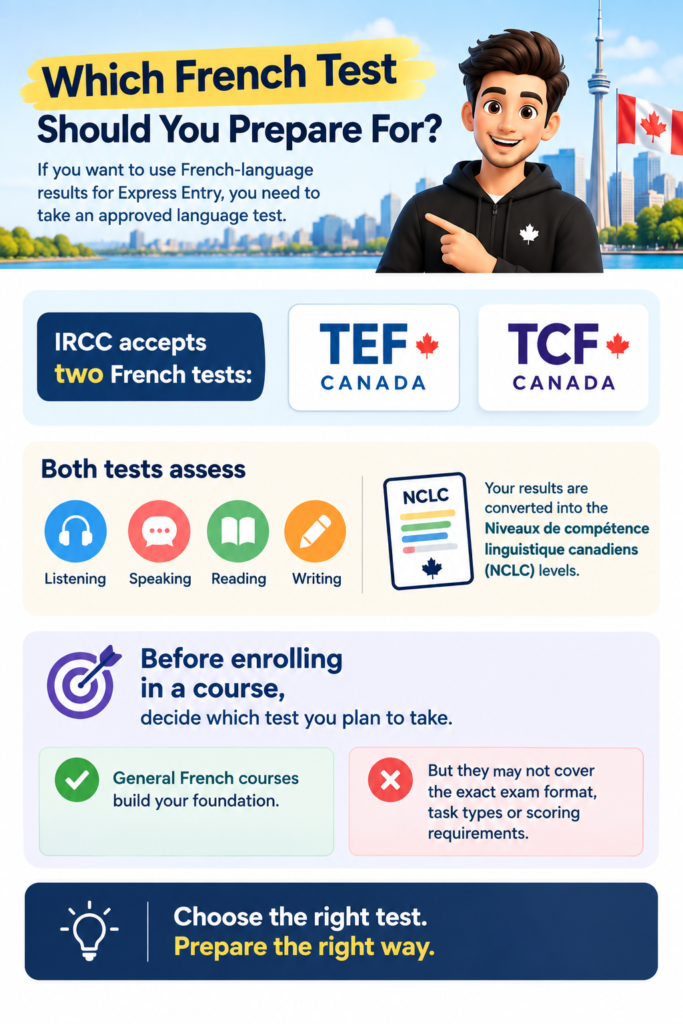
Which French Test Should You Prepare For?
If you want to use French-language results for Express Entry, you need to take an approved language test.
IRCC accepts two French-language tests for Express Entry:
- TEF Canada
- TCF Canada
These tests assess listening, speaking, reading, and writing. Your results are converted into the Niveaux de compétence linguistique canadiens (NCLC) levels used for Canadian immigration.
Before enrolling in a course, decide which test you plan to take. Some courses focus on general French, while others specifically prepare students for TEF Canada or TCF Canada.
A general French course may improve your language foundation, but it may not cover the exact exam format, task types, or scoring requirements you need.
Best Online French Courses and Learning Options
There is no single course that suits every Canada PR aspirant. Your choice should depend on your current French level, learning schedule, budget, and whether you need general language instruction or exam-specific preparation.
The following options serve different learning needs. They are not a verified ranking of course quality.
1. Coursera: Online French Language Courses
Coursera offers online French-language courses that learners can explore at different levels. These courses can help build foundational skills such as vocabulary, grammar, pronunciation, reading comprehension, and communication.
The available course catalogue includes beginner and intermediate French options, along with courses focused on the French language and culture. Course formats, access, and costs vary.
What you can learn
Depending on the course, you may practice:
- Basic French vocabulary and grammar.
- Everyday conversations.
- Listening and reading comprehension.
- Sentence structure and pronunciation.
- French language and cultural topics.
Who may benefit?
Coursera may suit learners who prefer flexible, self-paced study or want to begin learning French before joining an exam-focused course.
Important: Check the course syllabus carefully. A general French course should not be assumed to provide complete TEF Canada or TCF Canada preparation.
2. Alliance Française: Structured French Learning
Alliance Française centers provide French-language education, with course availability and formats varying by location.
Structured classes may help learners follow a planned progression through French language levels. Depending on the center, students may receive instructor guidance, classroom activities, and opportunities to practice speaking.
Some centers also provide information or preparation related to French proficiency tests. For example, Alliance Française Delhi provides information about TCF Canada.
What to check before enrolling
- Does the center offer online classes?
- Which French levels are available?
- Are classes suitable for complete beginners?
- Is TEF Canada or TCF Canada preparation included?
- Are speaking and writing activities part of the course?
- What are the fees and class timings?
Who may benefit?
This option may suit learners who prefer structured lessons, regular classes, and instructor-led learning rather than studying entirely independently.
3. Online TEF Canada Preparation Courses
TEF Canada preparation courses are designed for learners who intend to take the Test d’évaluation de français for Canadian immigration purposes.
Depending on the provider, preparation may include practice exercises, mock tests, speaking activities, writing tasks, and guidance on the test format.
What to look for
A useful TEF Canada preparation course should clearly explain:
- Which test sections it covers.
- Whether practice materials follow the current test format.
- How speaking and writing feedback is provided.
- Whether timed mock tests are included.
- How progress is assessed.
Who may benefit?
TEF Canada preparation may suit learners who have already developed some French proficiency and now want to practice the specific tasks required for the exam.
If you are a beginner, you may need to build your language foundation before starting intensive test preparation.
4. Online TCF Canada Preparation Courses
TCF Canada is another French-language test accepted for Express Entry. It is important to understand its format before choosing preparation materials.
A TCF Canada-focused course may include practice in listening, speaking, reading, and writing, depending on the provider and course structure.
What to check
Before enrolling, confirm whether the course:
- Specifically prepares students for TCF Canada.
- Covers the relevant test components.
- Includes practice questions and timed exercises.
- Provides feedback on productive skills.
- Explains how results relate to NCLC levels.
Who may benefit?
This option may suit candidates who have chosen TCF Canada and want their preparation to focus on that test rather than general French learning.
Do not assume a course for TEF Canada automatically covers TCF Canada adequately. Compare the course syllabus with the test you intend to take.
5. Free Online French Learning Resources
Free online resources can help learners practice regularly without committing to a paid course.
Options include educational videos, language-learning websites, vocabulary exercises, and French listening activities. TV5MONDE, for example, provides French-learning resources that can supplement your studies.
Free resources can be useful for building a foundation, practicing vocabulary, and developing listening habits. However, learners may need additional support for exam-specific preparation, especially for speaking and writing.
Who may benefit?
Free resources may suit:
- Beginners who want to explore French before enrolling.
- Learners who need extra daily practice.
- Students supplementing a structured course.
- Candidates who want to practice listening and vocabulary.
Use these resources consistently, but check that your study plan also covers the skills required for your intended immigration language test.
Online French Learning Options: Quick Comparison
| Learning option | Main purpose | May suit |
| Coursera | General French learning | Self-paced learners |
| Alliance Française | Structured French education | Learners who prefer guided classes |
| TEF Canada preparation | Exam-specific practice | Candidates taking TEF Canada |
| TCF Canada preparation | Exam-specific practice | Candidates taking TCF Canada |
| Free learning resources | Supplementary practice | Beginners and independent learners |
Course availability, fees, teaching formats, and exam-preparation services can change. Confirm the current details directly with the provider before enrolling.
What to Look for in an Online French Course
Choosing a course based only on its price, duration, or advertised results can lead to a mismatch with your goals.
Here are some important factors to consider.
1. Your Current French Level
Start by identifying whether you are a complete beginner, have basic French knowledge, or are already comfortable with intermediate-level material.
Beginners may need to develop pronunciation, vocabulary, grammar, and everyday communication skills before beginning intensive exam preparation.
If you already know French, consider taking a level assessment so you can focus on the areas where you need the most improvement.
2. TEF Canada or TCF Canada Preparation
If your goal is Express Entry, check whether your course prepares you for the specific test you intend to take.
Both tests are accepted by IRCC, but their formats and scoring systems differ. A course designed for one exam may not cover the other in sufficient detail.
3. Speaking and Writing Feedback
Speaking and writing require more than memorizing vocabulary. You need to communicate clearly, organize your ideas, and respond appropriately to the task.
Look for courses that explain how feedback is provided. Ask whether it comes from an instructor, an automated tool, or self-assessment activities.
4. Practice Tests and Progress Tracking
Mock tests can help you become familiar with the exam format and identify areas that need improvement.
However, practice scores are estimates and do not guarantee your official test result. Choose resources that explain your mistakes rather than simply displaying a score.
5. Course Schedule and Budget
Consider how much time you can realistically dedicate to learning French each week.
Compare course fees, class timings, access duration, instructor support, and any additional costs for practice materials or mock tests.
A course should fit your schedule well enough for you to practice consistently.
How to Prepare for NCLC 7 in French
If you are targeting NCLC 7 for Express Entry, you need to meet the required level in all four abilities: listening, speaking, reading, and writing.
A practical preparation plan includes:
- Assess your current level: Identify your strengths and weaknesses in French.
- Build your foundation: Work on vocabulary, grammar, and everyday communication.
- Choose your exam: Decide whether you will prepare for TEF Canada or TCF Canada.
- Practice all four abilities: schedule regular listening, speaking, reading, and writing activities.
- Complete timed practice: Become familiar with the test format and time limits.
- Review your mistakes: Use feedback to identify skills that need more work.
- Check your progress: Take practice tests periodically and adjust your study plan.
The time required to reach NCLC 7 varies considerably. It depends on your starting level, learning schedule, practice quality, and ability to develop all four language skills.
Avoid relying on claims that promise a guaranteed NCLC level within a fixed number of weeks or months.
Common Mistakes to Avoid When Learning French for Canada PR
Candidates sometimes focus heavily on completing lessons without checking whether their preparation matches their immigration goal.
Avoid these common mistakes:
- Choosing a general French course without checking whether it includes TEF or TCF preparation.
- Practicing only speaking while neglecting reading, writing, and listening.
- Relying entirely on memorized answers.
- Assuming a mock-test score guarantees an official result.
- Registering for an exam before understanding its format.
- Assuming French proficiency guarantees permanent residence.
- Ignoring the validity requirements for language test results.
A balanced approach should combine language development, exam-specific practice, and accurate immigration information.
Frequently Asked Questions
Q1. Which online French course is best for Canada PR?
The right course depends on your current level and whether you need general French lessons or TEF Canada/TCF Canada preparation. Compare course content, instructor feedback, practice tests, and fees before choosing.
Q2. Can I learn French online for Canada PR?
Yes. Online courses, instructor-led classes, and self-study resources can help you develop French skills. To use French results for Express Entry, you must take an IRCC-accepted language test.
Q3. What French level is required for the Express Entry French-language category?
The French-language category generally requires NCLC 7 or higher in all four abilities, along with the applicable Express Entry program eligibility requirements. Check current IRCC instructions before applying.
Q4. Does learning French guarantee extra CRS points?
No. Additional CRS points depend on your official French test results and English proficiency. Eligible candidates may receive 25 or 50 additional points.
Q5. Are Coursera French courses enough for TEF Canada?
A Coursera French course may help build general language skills, but you should verify whether it specifically prepares you for TEF Canada. You may need separate exam-focused practice.
Conclusion
Choosing the right online French course can help you work toward your Canadian immigration language goals. Coursera and other general learning resources may support your French foundation, while structured classes and TEF Canada or TCF Canada preparation courses can provide more focused exam practice.
Before enrolling, assess your current level, compare course features, and decide which approved French test you plan to take.
French proficiency may improve your Express Entry profile, but a course certificate, mock-test score, or French-language ability alone does not guarantee an ITA or Canadian PR.
LinguoPrep may be worth considering for learners who want a more exam-focused approach to French preparation rather than relying entirely on general French-learning platforms.
If you are a beginner, you may first need to develop your vocabulary, grammar, pronunciation, and basic communication skills. Learners who already have a foundation in French can compare LinguoPrep’s exam-preparation features with other TEF Canada or TCF Canada preparation options.
As with any preparation provider, check the current syllabus, test coverage, pricing, and course features directly with LinguoPrep before enrolling.
