Can French Help in Getting Canadian Citizenship?
Canada is known for its multicultural environment and bilingual identity. English and French are the country’s two official languages, and both play an important role in immigration and citizenship pathways. Many aspiring immigrants often ask: “Can French Help in Getting Canadian Citizenship?” The answer is yes — learning French can significantly improve your immigration journey and open more opportunities in Canada.
At Linguoprep, students and professionals are increasingly exploring French language training to strengthen their Canada PR and citizenship profiles. From gaining extra CRS points to accessing special immigration streams, French proficiency offers multiple advantages.
Why French Matters in Canada
Canada has a large French-speaking population, especially in provinces like Quebec and parts of Ontario, New Brunswick, and Manitoba. The Canadian government actively encourages bilingualism and supports immigration programs for French-speaking candidates.
This is why French language benefits for Canada PR have become more important in recent years. Immigration authorities now reward applicants who demonstrate strong French language skills through approved exams like TEF Canada or TCF Canada.
French not only helps with immigration but also improves job prospects, social integration, and long-term settlement opportunities.
How French Helps in Canada PR and Citizenship
Many people confuse permanent residency with citizenship. While French may not directly guarantee citizenship, it can make the path much smoother by improving your chances of receiving permanent residency first.
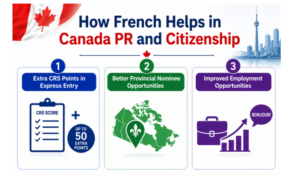
1. Extra CRS Points in Express Entry
One of the biggest advantages of learning French is gaining additional points in the Express Entry system. Candidates with French proficiency can earn bonus points even if English remains their primary language.
The Canadian government provides additional points for strong French skills under the Comprehensive Ranking System (CRS). This makes French points in Express Entry extremely valuable for applicants with moderate CRS scores.
For many applicants, these extra points become the deciding factor in receiving an Invitation to Apply (ITA).
2. Better Provincial Nominee Opportunities
Several provinces run dedicated immigration streams for bilingual or French-speaking applicants. These programs are part of the growing bilingual immigration opportunities in Canada.
Ontario, for example, has a French-Speaking Skilled Worker Stream designed specifically for candidates with French proficiency. Other provinces also encourage Francophone immigration to support local communities.
This creates additional pathways for applicants who may not qualify under regular Express Entry draws.
3. Improved Employment Opportunities
Canada values bilingual professionals in industries such as healthcare, customer service, education, tourism, and government sectors.
Employers often prefer candidates who can communicate in both English and French. This means French speaking immigrants in Canada may have access to better jobs and wider career opportunities.
Learning French can therefore improve both immigration success and long-term career growth.
Also Read: CELPIP vs IELTS: Which Test Is Best for Canada PR?
French Language Requirements for Canada
To gain immigration benefits, applicants usually need to prove their language ability through approved exams.
The most popular test is the TEF exam for Canada immigration. TEF Canada evaluates speaking, listening, reading, and writing skills in French. Your scores are then converted into Canadian Language Benchmark (CLB) levels.
Another accepted test is TCF Canada.
Preparing for these exams requires proper training, structured study plans, and regular practice. Institutions like Linguoprep help students build the language skills needed to achieve competitive scores.
Can French Help in Getting Canadian Citizenship Directly?
When applying for citizenship, applicants must meet certain eligibility criteria, including residency requirements and language ability.
The official Canada citizenship language requirements allow applicants to prove proficiency in either English or French. If you are comfortable in French, you can use it to satisfy citizenship language conditions.
Although French alone does not guarantee citizenship approval, it supports your overall immigration journey by helping you:
- Obtain permanent residency faster
- Increase CRS scores
- Qualify for provincial programs
- Improve employability
- Meet citizenship language criteria
This is why many immigration experts recommend French as a strategic advantage.
Also Read: CELPIP vs PTE Core in 2026: Which Test Is Best for Canada PR?
French vs English: Which Is Better?
English remains the most commonly used language for immigration and daily communication in Canada. However, French adds a unique edge that many applicants overlook.
The real value lies in combining both languages. Candidates with bilingual abilities enjoy stronger immigration profiles and broader opportunities.
This growing demand highlights the importance of French proficiency for Canadian citizenship and long-term settlement success.
Also Read: TEF Canada in 2026: Which French Test Should You Choose for Canada Immigration?
Is Learning French Worth It for Canada Immigration?
Absolutely. Learning French is now one of the smartest ways to strengthen your Canada immigration profile.
The government continues to promote Francophone immigration outside Quebec, creating more opportunities for skilled workers, students, and professionals.
Here are some major advantages of learning French for Canada:
- Higher CRS scores
- Access to special immigration streams
- Better employment opportunities
- Easier integration into Canadian society
- Stronger long-term settlement prospects
These benefits clearly show the growing French language advantage in Canada PR pathways.
Also Read: CELPIP Speaking Test 2026: Master All 8 Tasks with High-Scoring Response Templates
How Linguoprep Can Help
Preparing for French language exams requires the right guidance and consistent practice. Linguoprep offers professional French coaching designed for immigration aspirants.
Their training programs focus on:
- TEF Canada preparation
- Vocabulary and grammar improvement
- Speaking practice sessions
- Listening and comprehension skills
- Exam strategies and mock tests
Whether you are starting from scratch or aiming for higher scores, expert guidance can significantly improve your chances.
Also Read: CELPIP Test Day Guide 2026: Computer Test, Timing, Unscored Questions, Results and Common Mistakes
Final Thoughts
So, Can French Help in Getting Canadian Citizenship? The answer is definitely yes. French may not directly grant citizenship, but it plays a powerful role in improving your immigration profile, increasing CRS scores, and unlocking new opportunities.
From gaining French points in Express Entry to accessing bilingual immigration opportunities in Canada, the advantages are substantial. In today’s competitive immigration landscape, French can become the extra edge that helps you succeed.
For students and professionals planning their Canadian future, investing time in French language learning is a smart and future-focused decision.
Contact us today for more details and further assistance.
FAQs
1. Can French help in getting Canadian citizenship?
Yes, French can improve your immigration profile, help you obtain PR faster, and fulfill citizenship language requirements.
2. What is the TEF exam for Canada immigration?
The TEF Canada exam is an official French language test accepted for Canadian immigration and PR applications.
3. How many CRS points can French add?
French proficiency can add up to 50 extra CRS points in Express Entry depending on your scores.
4. Is French mandatory for Canadian citizenship?
No, applicants can prove language proficiency in either English or French.
5. Which provinces prefer French-speaking immigrants?
Ontario, New Brunswick, Manitoba, and Quebec actively encourage French-speaking immigrants.
6. What are the French language benefits for Canada PR?
Benefits include higher CRS scores, better job opportunities, and access to special immigration streams.
7. Can beginners learn French for Canada immigration?
Yes, with proper coaching and preparation, beginners can achieve competitive TEF scores.
8. Is French useful outside Quebec?
Yes, many provinces support Francophone immigration and bilingual employment opportunities.
9. How long does it take to prepare for TEF Canada?
Preparation time depends on your current level, but most learners require several months of structured study.
10. Why should I choose Linguoprep for French preparation?
Linguoprep provides expert coaching, exam-focused training, and personalised support for TEF Canada preparation.
