

Canada’s immigration system is evolving rapidly, and language proficiency is becoming one of the biggest deciding factors for permanent residency success. In 2026, French is expected to play an even more important role in Canada’s immigration strategy.
For years, most applicants focused only on IELTS and English proficiency. However, recent Express Entry trends clearly show that candidates with French skills are receiving major advantages through category-based draws, additional CRS points, and provincial immigration opportunities.
Today, French for Canada PR 2026 is not just an additional skill; it is becoming a strategic immigration advantage. In this blog by Linguoprep, we will talk about why French is important for Canada PR.
Why Canada Is Prioritising French-Speaking Immigrants
Canada has two official languages:
- English
- French
To strengthen bilingual communities outside Quebec, the Canadian government is actively inviting more French-speaking immigrants.
Immigration, Refugees and Citizenship Canada (IRCC) has introduced targeted French-language Express Entry draws that specifically favour bilingual applicants.
Canada’s Main Goals Behind French Immigration
- Increase French-speaking population outside Quebec
- Fill labour shortages in bilingual sectors
- Strengthen francophone communities
- Promote economic growth across provinces
- Support government bilingual policies
Because of these goals, Canada PR through French language is becoming one of the fastest-growing immigration pathways.
How French Helps Increase CRS Scores
One of the biggest advantages of learning French is the extra CRS points available under Express Entry.
Candidates who take approved French language exams like TEF Canada or TCF Canada can gain valuable points that improve their rankings significantly.
Benefits of French in CRS System
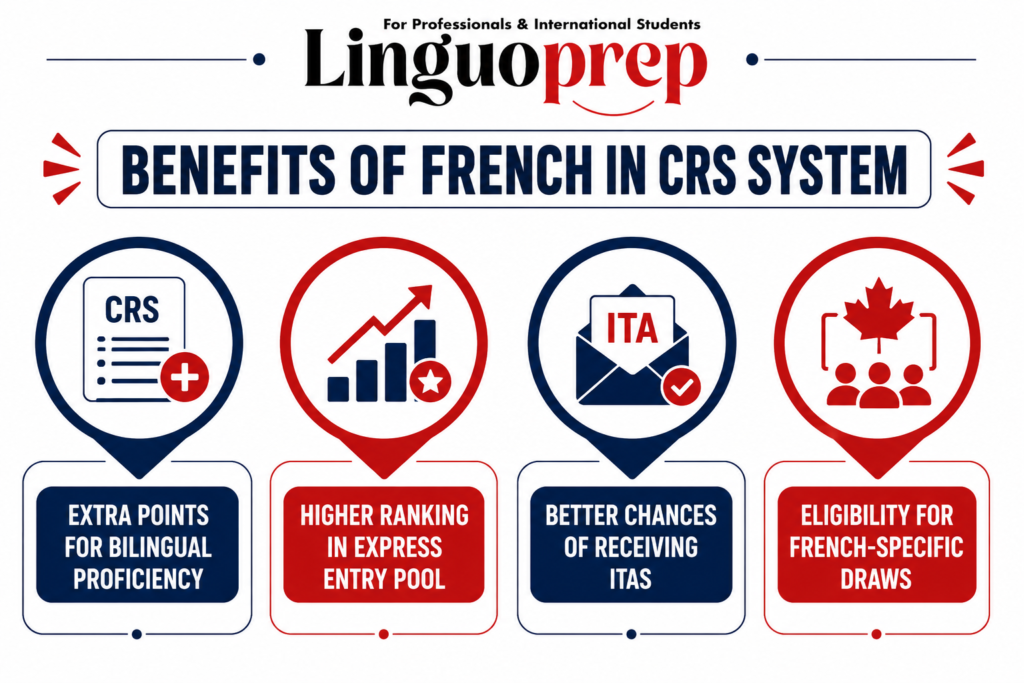
Take a look at the benefits of French in the CRS system.
- Extra points for bilingual proficiency
- Higher ranking in Express Entry pool
- Better chances of receiving ITAs
- Eligibility for French-specific draws
Why This Matters
Many applicants miss PR invitations by only a few points. French proficiency can bridge that gap and make profiles competitive.
The growing importance of French language benefits for Express Entry is expected to continue throughout 2026.
French-Specific Express Entry Draws Are Easier
General Express Entry draws often require very high CRS scores because thousands of candidates compete together.
French-language category draws, however, usually have:
- Lower CRS cut-offs
- Less competition
- More targeted selection
This means even candidates with moderate CRS scores may receive invitations if they have strong French proficiency.
Why French Draws Are Important
French-language Express Entry draws have become one of the most attractive immigration opportunities for skilled workers planning to move to Canada. Unlike general draws, these targeted rounds focus specifically on candidates with strong French proficiency, which automatically reduces competition.
This means applicants who may not qualify through regular Express Entry draws can still receive Invitations to Apply (ITAs) through French-category selections.
Key Advantages
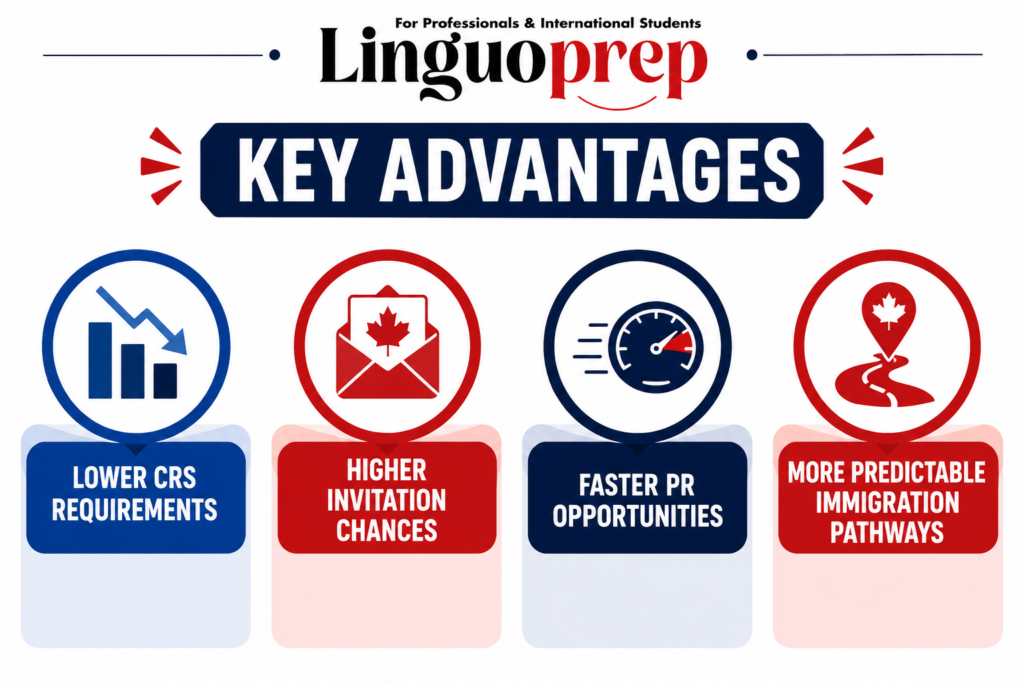
- Lower CRS requirements
- Higher invitation chances
- Faster PR opportunities
- More predictable immigration pathways
For many applicants, learning French has become a smarter strategy than repeatedly retaking IELTS.
This is why immigration experts increasingly recommend French for Canada PR 2026 as a long-term solution.
Provincial Nominee Programs Also Favor French Speakers
French proficiency is not limited to Express Entry advantages. Several provinces now actively prioritise francophone immigrants.
Provinces Supporting French-Speaking Candidates
- Ontario
- New Brunswick
- Manitoba
- Nova Scotia
- Prince Edward Island
Some provincial streams are specifically designed for bilingual applicants.
Popular Francophone Immigration Streams
- Ontario French-Speaking Skilled Worker Stream
- New Brunswick Francophone Pathways
- Francophone Mobility Program
- Employer-driven bilingual recruitment programs
These pathways can provide:
- Faster nominations
- Less competition
- Additional CRS points
- Better settlement support
As a result, French speaking immigration programs Canada are becoming increasingly valuable.
French Creates Better Job Opportunities in Canada
Learning French is not only useful for PR — it also improves employment opportunities after landing in Canada.
Many Canadian employers actively prefer bilingual workers.
Industries Where French Speakers Are in Demand
Listed below are some of the industries where French speakers are in demand.
High-Demand Sectors
- Healthcare
- Banking and finance
- Hospitality and tourism
- Government administration
- Education
- Customer service
- International business
Employment Benefits
- Better salaries
- Wider job options
- Stronger career growth
- More networking opportunities
Bilingual candidates often stand out in competitive Canadian job markets.
Why 2026 Is the Best Time to Start Learning French
Canada’s immigration targets are increasing every year. At the same time, the government is strongly focusing on francophone immigration outside Quebec.
Experts believe French-focused immigration pathways will continue expanding in 2026 and beyond.
Final Thoughts
The Canadian immigration landscape is changing, and French proficiency is becoming one of the most powerful advantages for PR applicants.
From additional CRS points and targeted Express Entry draws to provincial nominations and better job opportunities, the benefits are significant.
The rise of French for Canada PR 2026 clearly shows that bilingual candidates are likely to have stronger immigration opportunities in the coming years.
For students, skilled workers, and future immigrants, learning French today can become the key to securing Canadian permanent residency tomorrow. Contact us and start your French learning journey today.
FAQs
1. Why is French important for Canada PR in 2026?
French is becoming important because Canada is prioritising bilingual immigrants through targeted Express Entry draws and provincial immigration programs.
2. Can learning French increase my CRS score?
Yes, French proficiency can provide additional CRS points, helping improve your ranking in the Express Entry pool.
3. Which French language tests are accepted for Canada PR?
Canada accepts TEF Canada and TCF Canada as approved French language proficiency tests for immigration purposes.
4. Do I need to know both English and French for Canada PR?
No, but knowing both languages can significantly improve your chances of receiving an Invitation to Apply (ITA).
5. What are French-specific Express Entry draws?
These are category-based draws conducted by IRCC that specifically invite candidates with strong French language skills.
6. Which provinces support French-speaking immigrants?
Ontario, New Brunswick, Manitoba, Nova Scotia, and Prince Edward Island actively support French-speaking immigration pathways.
7. Is French useful outside Quebec?
Yes, French-speaking professionals are in demand across multiple Canadian provinces outside Quebec as well.
8. How many CRS points can French add?
Depending on your language proficiency and profile, French can add valuable additional CRS points under Express Entry.
9. Is TEF Canada difficult for beginners?
TEF Canada can be challenging initially, but with proper preparation and consistent practice, beginners can achieve competitive scores.
10. Is learning French worth it for long-term settlement in Canada?
Yes, French improves immigration opportunities, job prospects, networking, and long-term career growth in Canada.
